
per person sharing · 2 adults
Indicative starting rate. Dates, room choice and permit availability affect the final total. International flights excluded.
Book this safari12 Days Uganda Safari: Complete Wildlife & Primate Circuit
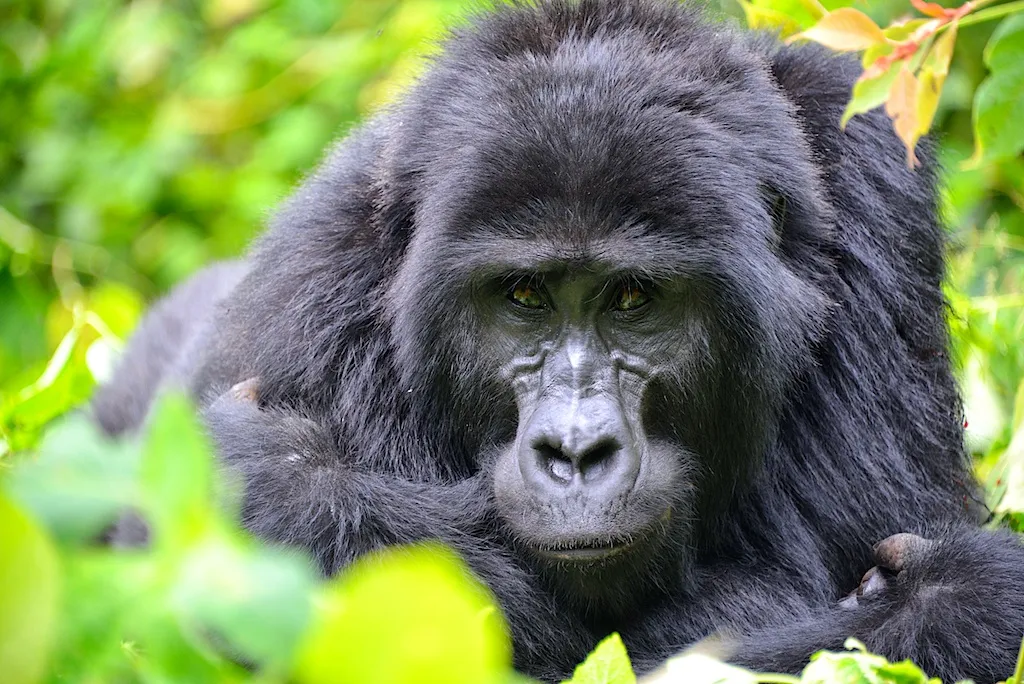
After the gorilla trek, the journey continues toward Mgahinga Gorilla National Park for golden monkey trekking beneath the Virunga volcanoes. Adding golden monkeys makes the itinerary particularly strong for primate enthusiasts because the trip combines chimpanzees, mountain gorillas and golden monkeys in three distinct forest environments. Travellers preparing for the gorilla component can also review Tavira’s complete gorilla trekking guide before confirming their journey.
Lake Mburo National Park provides the final protected-area experience before returning to Entebbe. Its zebras, giraffes, impalas, elands, buffaloes and open woodland create a different atmosphere from both Queen Elizabeth and Murchison Falls. Positioning Lake Mburo at the end also breaks the long southwestern return journey, helping this Uganda safari package maintain a more comfortable rhythm instead of finishing with one exhausting transfer.
| Safari Detail | 12 Days Uganda Safari Information |
|---|---|
| Duration | 12 Days / 11 Nights |
| Country | Uganda |
| Start | Entebbe International Airport |
| End | Entebbe International Airport |
| Rhino Tracking | Ziwa Rhino Sanctuary |
| Chimpanzee Trekking | Kibale Forest National Park |
| Gorilla Trekking | Bwindi Impenetrable National Park |
| Golden Monkeys | Mgahinga Gorilla National Park |
| Major Wildlife Parks | Murchison Falls, Queen Elizabeth and Lake Mburo |
| Safari Style | Private and Customizable |
| Accommodation | Mid-range or Luxury |
The safari works particularly well for first-time Uganda visitors because it provides several different wildlife experiences rather than concentrating the entire holiday around one activity. Travellers who want a shorter introduction can compare Tavira’s 5-Day Uganda Gorilla and Wildlife Safari, while those with more time can explore the 21-Day Best of Uganda Safari.
Travellers seeking additional gorilla preparation can read the Uganda gorilla trekking planning guide, while those comparing two East African trekking destinations can study this detailed Uganda or Rwanda gorilla trekking comparison. These resources help travellers understand why permits, lodge locations, road transfers and trekking sectors should be considered before purchasing international flights or confirming accommodation independently.
12 Days Uganda Safari Itinerary
The 12 Days Uganda Safari follows a broad but logical route from Entebbe through Ziwa and Murchison Falls before turning south through Kibale, Queen Elizabeth, Bwindi, Mgahinga and Lake Mburo. The sequence gives travellers meaningful time in Uganda’s major wildlife and primate environments without returning repeatedly along the same roads. Tavira’s Uganda national park guide provides additional context about the destinations included.
Road conditions, permit allocations, lodge availability and flight schedules can sometimes require small adjustments to the exact sequence. A professionally arranged itinerary should therefore protect the fixed activities first and adapt the surrounding transfers accordingly. The purpose of this program is not simply to visit many places, but to connect the strongest experiences into one journey where active trekking days are balanced with wildlife drives, boat safaris and scenic transfers.
| Day | Route | Main Experience |
|---|---|---|
| 1 | Arrival in Entebbe | Airport transfer and safari briefing |
| 2 | Entebbe – Ziwa – Murchison Falls | Rhino tracking and waterfall experience |
| 3 | Murchison Falls | Game drive and Nile boat safari |
| 4 | Murchison Falls – Kibale | Long scenic transfer through western Uganda |
| 5 | Kibale Forest | Chimpanzee trekking and optional Bigodi experience |
| 6 | Kibale – Queen Elizabeth | Scenic transfer and introductory wildlife viewing |
| 7 | Queen Elizabeth | Game drive and Kazinga Channel boat safari |
| 8 | Queen Elizabeth – Bwindi | Ishasha and transfer to gorilla country |
| 9 | Bwindi | Mountain gorilla trekking |
| 10 | Mgahinga | Golden monkey trekking |
| 11 | Mgahinga – Lake Mburo | Scenic transfer and wildlife experience |
| 12 | Lake Mburo – Entebbe | Final wildlife activity, Equator and departure |
Day 1: Arrival at Entebbe International Airport
Your 12 Days Uganda Safari begins at Entebbe International Airport, where a Tavira Africa Safaris representative welcomes you after arrival and assists with the transfer to your selected accommodation. The first day is deliberately kept simple so travellers can recover from international flights, organize luggage and settle into Uganda comfortably. Guests arriving earlier may consider an optional Entebbe activity, while late arrivals can proceed directly to their hotel.
After check-in, your driver-guide can provide a practical introduction to the safari route, expected travel times, weather conditions and major activities. This briefing is also an opportunity to confirm permit documents and discuss any dietary or mobility considerations before leaving Entebbe. Travellers can explore Tavira’s main Uganda Safari guide beforehand to understand how Uganda’s forests, savannahs and highlands connect during longer overland journeys.
Keeping the arrival day flexible protects the safari from international flight delays and prevents travellers from beginning their holiday with an exhausting transfer immediately after landing. Depending on the selected package, accommodation may be arranged around Entebbe rather than central Kampala because this generally provides easier airport access. Dinner arrangements depend on the arrival time, and the guide confirms the following morning’s departure before allowing guests to rest.
Day 2: Entebbe to Ziwa Rhino Sanctuary and Murchison Falls National Park
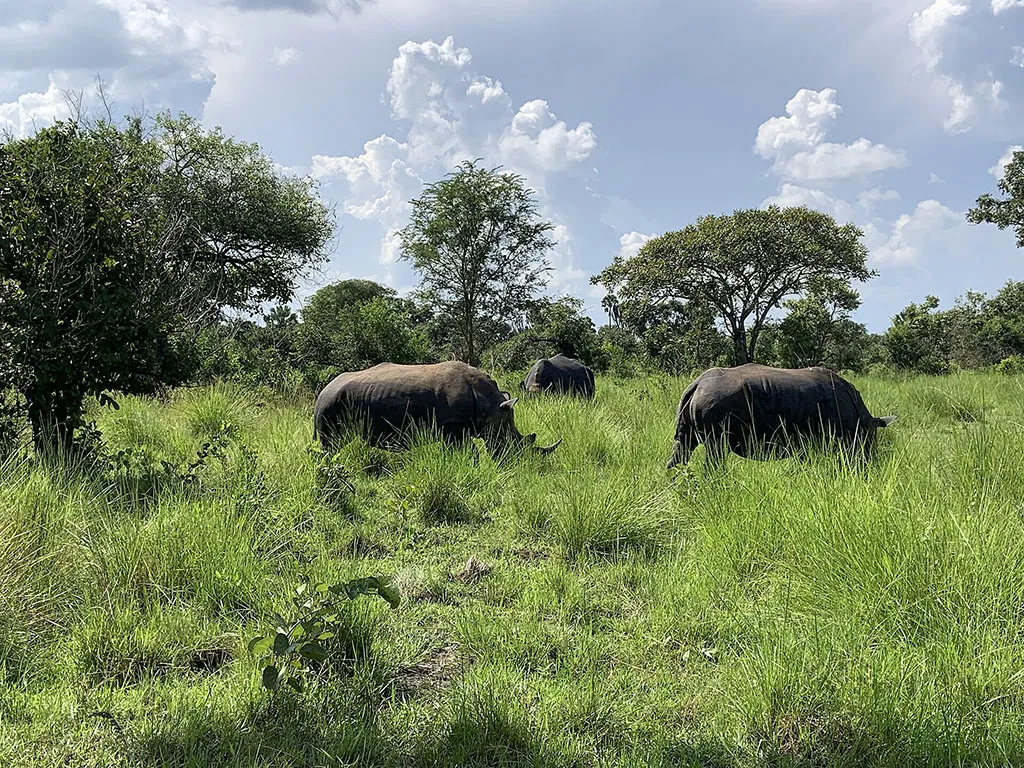
After breakfast, leave Entebbe and travel north toward Ziwa Rhino Sanctuary, where the first major wildlife experience takes place on foot. Accompanied by trained guides, travellers search for southern white rhinos while learning about their behaviour, protection and Uganda’s wider rhino conservation story. The walk creates an exciting beginning because it adds a species that visitors will not normally encounter roaming freely inside the other national parks on this itinerary.
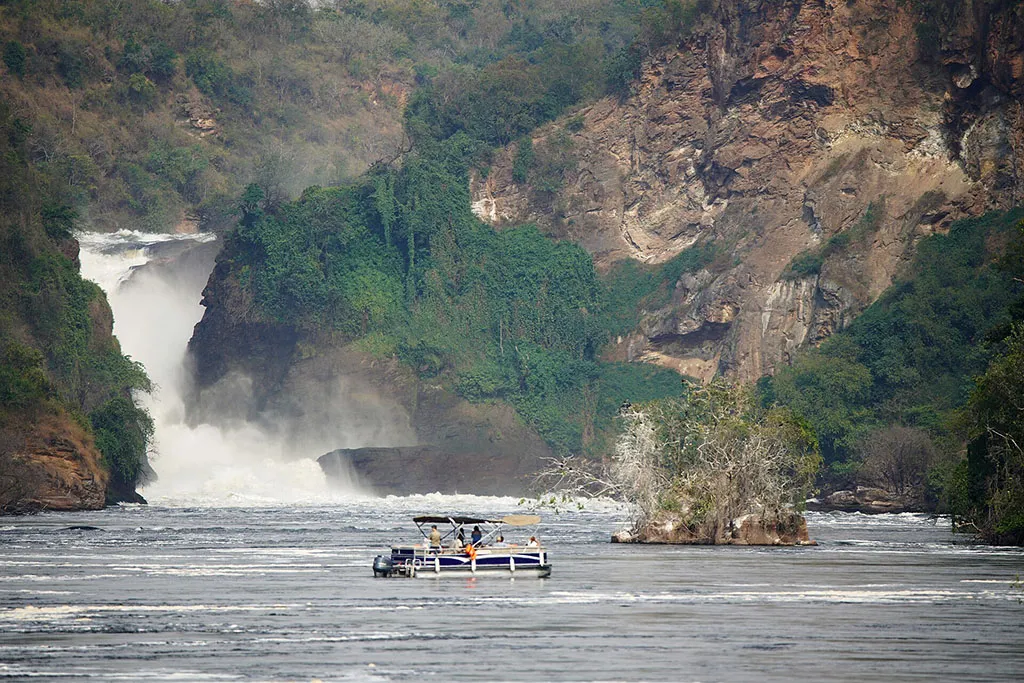
After rhino tracking, continue north toward Murchison Falls National Park, with an appropriate meal stop along the route. Depending on timing and the confirmed accommodation location, the journey can include a visit to the top of Murchison Falls. Here, travellers observe the immense force of the Nile as it passes through a narrow rocky channel before dropping powerfully into the gorge below.
The day ends with arrival at the selected Murchison Falls lodge, where travellers settle in before the first major savannah game-viewing day. Tavira’s Murchison Falls Safari Guide provides additional preparation for the park’s wildlife, Nile boat experiences and landscapes. Dinner is followed by an early night because game drives generally begin when temperatures are cooler and wildlife may be more active.
Day 3: Murchison Falls Game Drive and Nile Boat Safari
Begin the day with an early game drive across suitable areas of Murchison Falls National Park. The open savannah supports elephants, buffaloes, giraffes, Uganda kobs, hartebeests and numerous other species, while lions and leopards may also be encountered with patience and favourable wildlife movements. Your guide uses knowledge of habitat, tracks and recent sightings, but the experience remains natural and no particular animal should ever be presented as guaranteed.
After the morning drive and a suitable lunch break, board a boat safari on the Nile toward the base of Murchison Falls. The riverbanks often support hippos, crocodiles, elephants, buffaloes and numerous waterbirds, allowing visitors to watch wildlife from a completely different perspective. The boat gradually approaches the dramatic section where the Nile emerges from the gorge, creating excellent scenery and one of Uganda’s most memorable water-based safari experiences.
This combination of game drive and boat safari explains why Murchison is often recommended as an introduction to Uganda’s wildlife circuit. Travellers interested in the broader experience can explore Tavira’s guide to Uganda’s national parks or the company’s dedicated game-driving information. Return to the lodge later in the day for dinner and preparation for the longer transfer toward Kibale.
Day 4: Murchison Falls National Park to Kibale Forest National Park
Day Four is one of the longer road stages of the 12 Days Uganda Safari, connecting northern Uganda’s savannah country with the forested landscapes around Kibale. After breakfast, leave Murchison and travel south through changing towns, agricultural areas and increasingly green western scenery. The journey is intentionally treated as a transfer day rather than attempting to add another major activity that would make the schedule unnecessarily demanding.
Approaching the Fort Portal and Kibale region, the scenery becomes more mountainous and richly vegetated, with tea-growing areas, farms and forest fragments creating a strong contrast with Murchison’s open plains. Comfort and meal stops are arranged according to the final route. Tavira’s Ultimate Uganda Primate Safari Guide explains why Kibale works naturally between northern wildlife destinations and the Queen Elizabeth–Bwindi circuit farther south.
Arrive at the selected Kibale-area lodge and prepare for chimpanzee trekking the following morning. Guests should place trekking shoes, long trousers, rain protection, drinking water and a small daypack where they can be reached easily. The evening is intentionally relaxed after the longer drive, allowing travellers to enjoy the forest atmosphere and receive any final guidance required before entering the rainforest with trackers the next day.
Day 5: Chimpanzee Trekking in Kibale Forest National Park
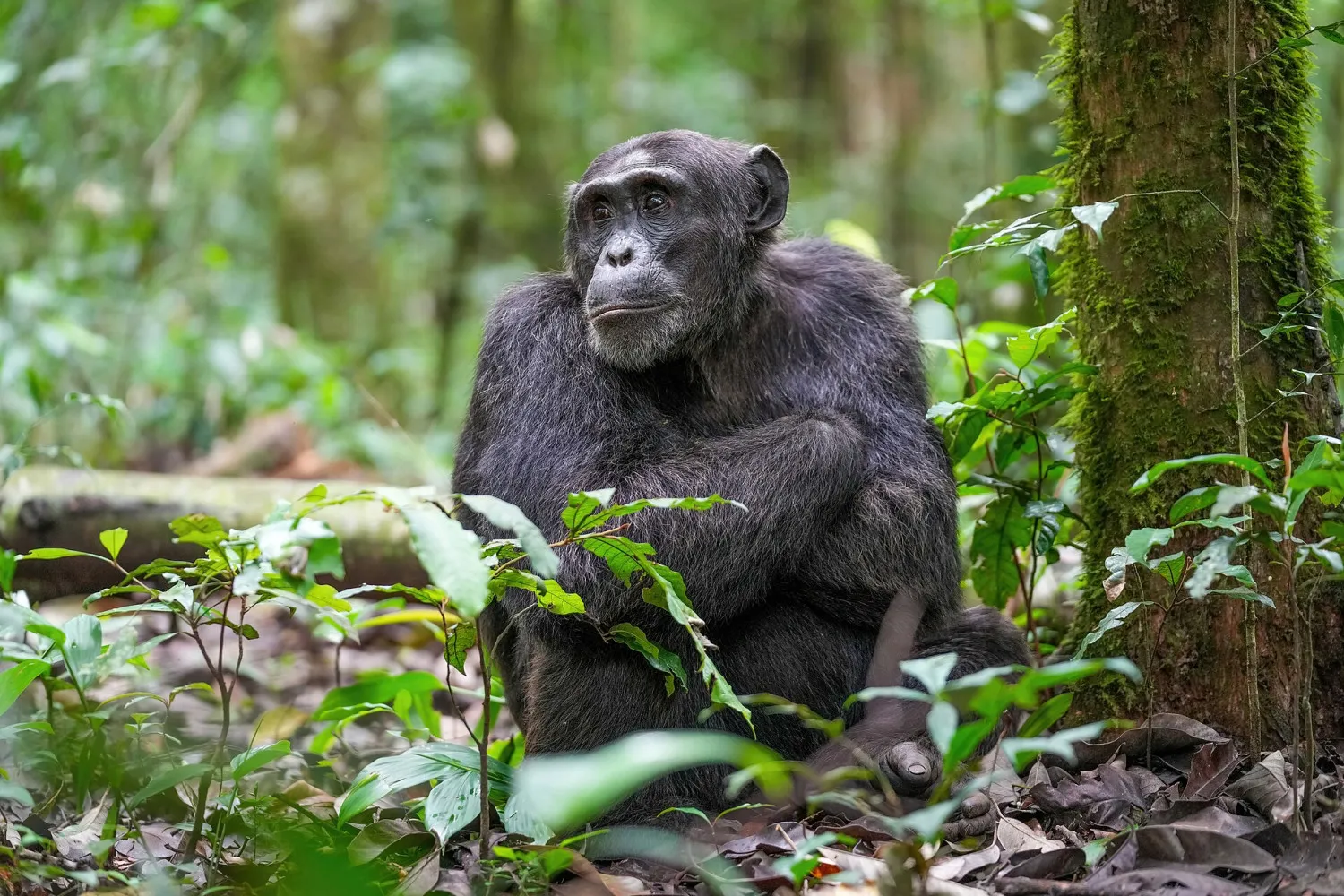
After breakfast, transfer to the designated briefing location for chimpanzee trekking. Rangers explain forest regulations, appropriate behaviour and group arrangements before the guided walk begins. Trackers then lead visitors through Kibale’s tropical forest while listening for calls, branch movements and other signs that may indicate the location of the habituated chimpanzee community. The forest itself is part of the experience, with birds, monkeys and dense vegetation surrounding the route.
Chimpanzees can be energetic and unpredictable, moving between the canopy and forest floor while feeding, resting, vocalizing or interacting socially. Once they are located, visitors follow ranger instructions carefully and observe the animals during the regulated encounter. Travellers wanting a deeper primate experience can also read Tavira’s Chimpanzee Habituation Experience guide, although habituation requires different planning and should not be substituted automatically for standard tracking.
Depending on the confirmed trekking session and available time, the afternoon may include a community or wetland experience around the Kibale region, such as Bigodi, or remain free for relaxation. This flexibility prevents the day from becoming overloaded after several hours in humid forest conditions. Guests return to their lodge later in the day and prepare for the shorter transfer toward Queen Elizabeth National Park the following morning.
Day 6: Kibale Forest to Queen Elizabeth National Park
Leave Kibale after breakfast and travel toward Queen Elizabeth National Park, following a natural continuation of Uganda’s western safari circuit. The route passes through attractive countryside and areas influenced by the Rift Valley landscape. Depending on the selected road, weather and timing, scenic stops may be possible before entering the Queen Elizabeth region. The shorter transfer gives travellers breathing room after the previous day’s active chimpanzee trekking experience.
Queen Elizabeth introduces a new safari environment dominated by savannah, wetlands, crater landscapes and broad views. Wildlife may begin appearing before the lodge is reached, creating opportunities for elephants, buffaloes, Uganda kobs, warthogs and other species. Travellers considering how Uganda combines forests with open wildlife areas can compare this route with Tavira’s Gorilla and Wildlife Safari, which uses the same contrast on a shorter schedule.
Depending on arrival time, a short game drive may be possible before checking into the selected lodge. The main wildlife activities are deliberately reserved for the following day so travellers can enjoy them without rushing after a road transfer. The evening provides time to relax, review camera equipment and discuss the morning game-drive plan, including likely habitats and the departure time recommended by the safari guide.
Day 7: Queen Elizabeth Game Drive and Kazinga Channel Boat Safari
The day begins with an early game drive through a productive wildlife area such as the Kasenyi plains or another route selected according to current conditions. Elephants, buffaloes, Uganda kobs, warthogs and waterbucks are among the species that may be encountered, while lions and leopards remain possible but never guaranteed. Experienced guides search patiently and use habitat knowledge instead of racing between sightings simply to complete a checklist.
After the morning drive and a suitable lunch break, continue to the Kazinga Channel for a boat safari between Lakes George and Edward. Hippos, crocodiles, buffaloes, elephants and numerous waterbirds may gather around the shoreline, creating excellent opportunities for observation and photography. The boat experience also provides a welcome change of pace because travellers can watch wildlife while seated instead of spending another continuous period inside a safari vehicle.
The combination of savannah wildlife and water-based viewing makes Queen Elizabeth an important bridge between Kibale and Bwindi. It allows travellers to experience classic African wildlife without diverting far from the natural southward route. Anyone considering a more extensive version can compare this journey with Tavira’s 21-Day Best of Uganda Safari Experience before deciding how much time to dedicate to each region.
Day 8: Queen Elizabeth National Park to Bwindi via Ishasha
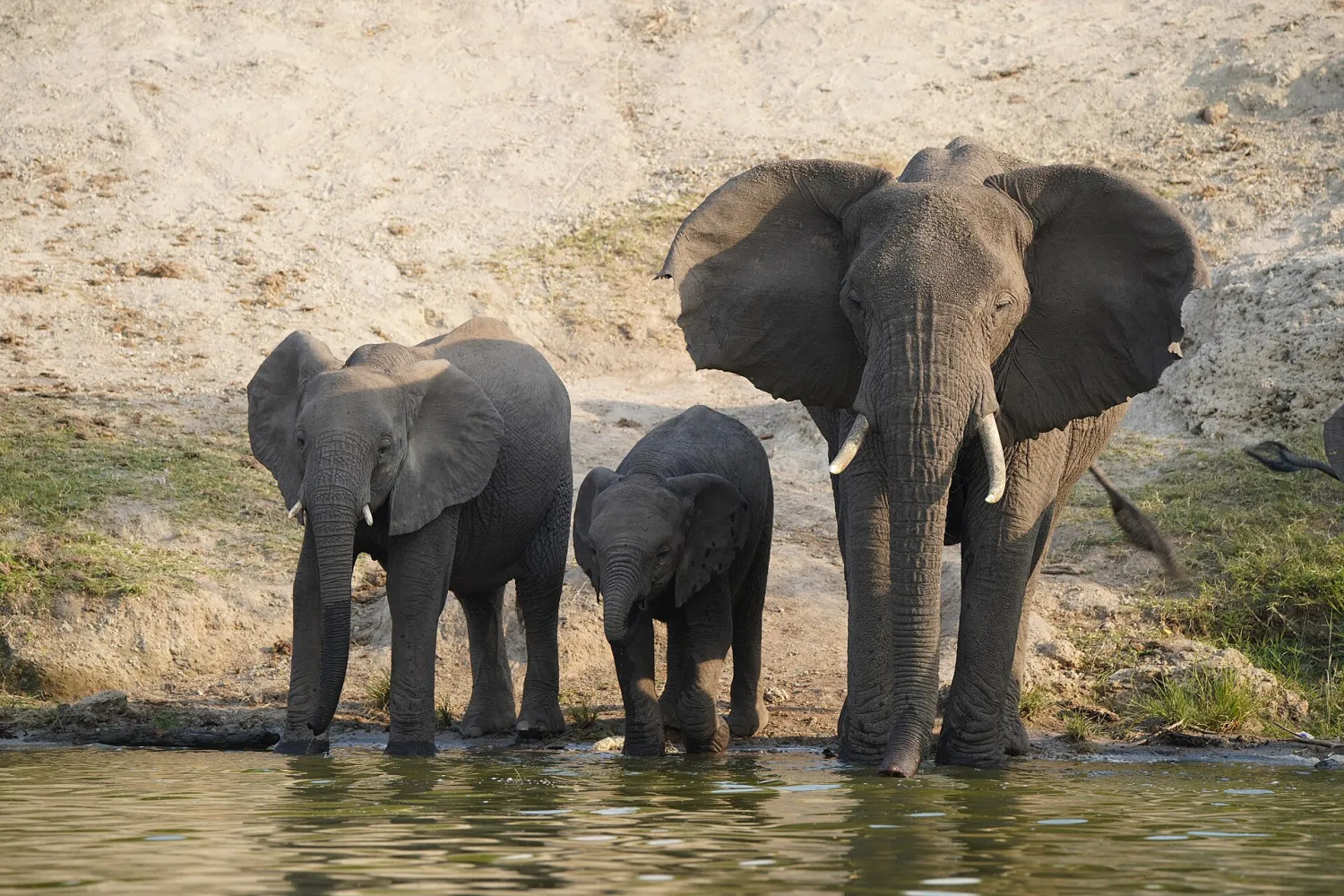
After breakfast, travel south through Queen Elizabeth National Park toward the Ishasha sector when road and operational conditions allow. Ishasha is internationally known for lions that sometimes rest in large fig trees, although sightings depend entirely on natural animal movement. The area can also reveal elephants, buffaloes, topis and other savannah wildlife, allowing the transfer toward Bwindi to remain part of the safari rather than becoming only a driving day.
The scenery changes dramatically after leaving Ishasha. Open wildlife country gradually gives way to cultivated hills, villages and increasingly forested highlands as the route approaches Bwindi. The final lodge choice must match the confirmed trekking sector. Tavira’s Bwindi Gorilla Trekking Guide is especially important here because Buhoma, Ruhija, Rushaga and Nkuringo involve different roads and should never be treated as interchangeable accommodation zones.
Arrival is planned early enough for guests to settle in, organize trekking equipment and receive final preparation for the following morning. Proper footwear, long trousers, rain protection, gloves where preferred and drinking water should be prepared before bed. The lodge can also assist with packed lunch arrangements where required. Travellers should rest properly because gorilla trekking is the most physically unpredictable activity within the entire twelve-day safari.
Day 9: Mountain Gorilla Trekking in Bwindi Impenetrable National Park
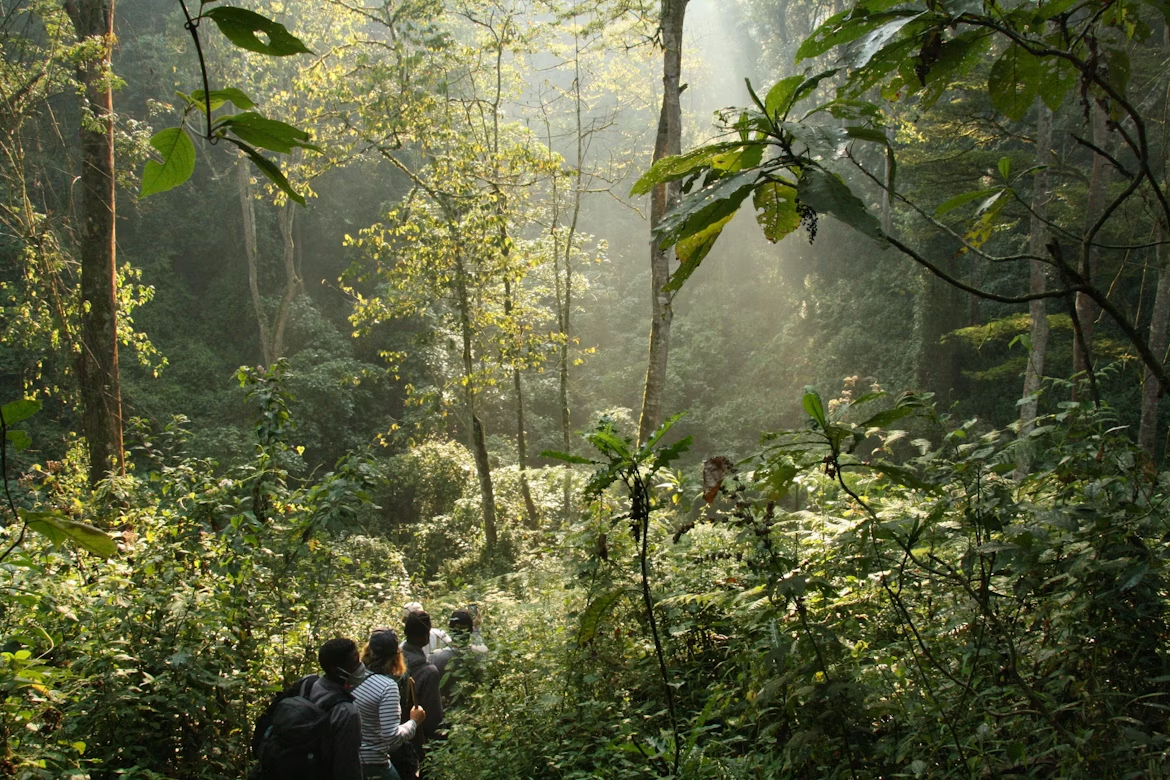
Gorilla trekking is the signature experience of the 12 Days Uganda Safari. After an early breakfast, transfer to the correct briefing point with identification, permit details and suitable trekking equipment. Rangers explain behaviour around the gorillas before visitors are allocated to a habituated family and guide team. Trackers then lead the group into Bwindi’s ancient forest, following fresh signs toward the family’s most recently known location.
The trek may be relatively short or physically demanding because mountain gorillas move freely through natural forest and cannot be positioned for visitors. Terrain may include steep slopes, muddy sections and dense vegetation, especially after rainfall. Once the assigned family is located, visitors enjoy the regulated viewing period while observing feeding, grooming, resting, movement and social interactions without interfering with the animals or ignoring instructions from the accompanying ranger team.
After leaving the gorillas, return through the forest and transfer back to the lodge for a well-earned rest. Tavira’s Complete Gorilla Trekking Guide provides additional information about preparation and appropriate expectations. Travellers seeking another specialist perspective can also review this Uganda gorilla trekking guide before deciding whether standard tracking or another gorilla experience better suits them.
Day 10: Golden Monkey Trekking in Mgahinga Gorilla National Park
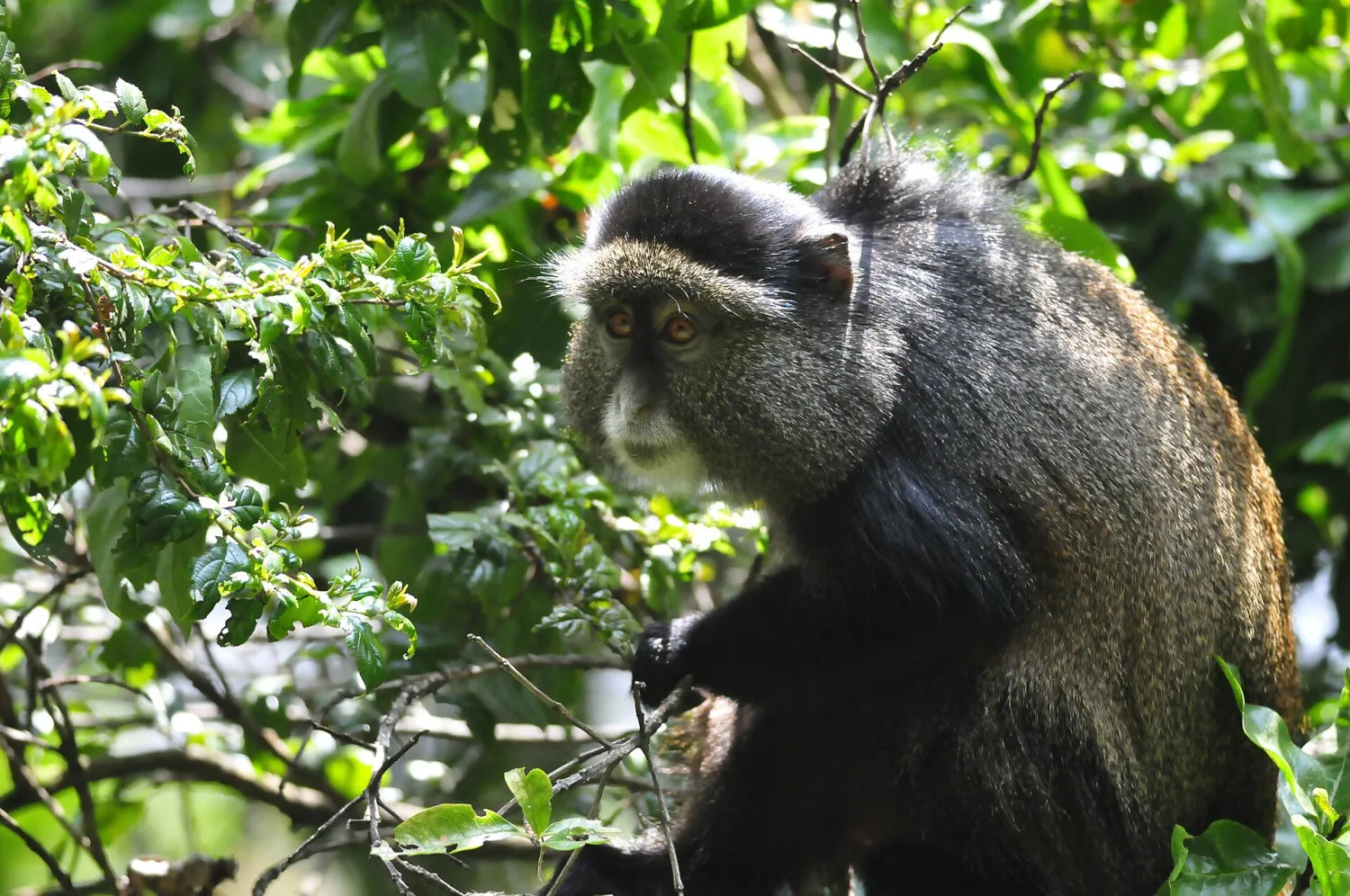
After the gorilla experience, continue the primate circuit with golden monkey trekking in Mgahinga Gorilla National Park. Depending on the confirmed Bwindi sector and lodge arrangement, the transfer toward Kisoro or Mgahinga may occur after the gorilla trek or early on Day Ten. This is why Tavira considers the southern route carefully when combining Bwindi with Mgahinga rather than selecting lodges independently from the actual itinerary.
Golden monkey trekking takes place in a very different environment from both Kibale and Bwindi. These lively primates are strongly associated with bamboo forests around the Virunga highlands and often move quickly while feeding and interacting. The experience therefore feels energetic and visually distinct from mountain gorillas. Ranger guidance remains important, and travellers should carry rain protection because conditions around the volcanoes can change rapidly during forest activities.
Adding Mgahinga transforms the journey into a particularly complete primate circuit because guests experience chimpanzees, mountain gorillas and golden monkeys within one Uganda itinerary. Travellers comparing Uganda with neighbouring Rwanda can read Tavira’s wider gorilla information together with this Uganda or Rwanda gorilla trekking guide. After the activity, return to the selected southwestern lodge for dinner and a relaxed evening.
Day 11: Mgahinga Region to Lake Mburo National Park
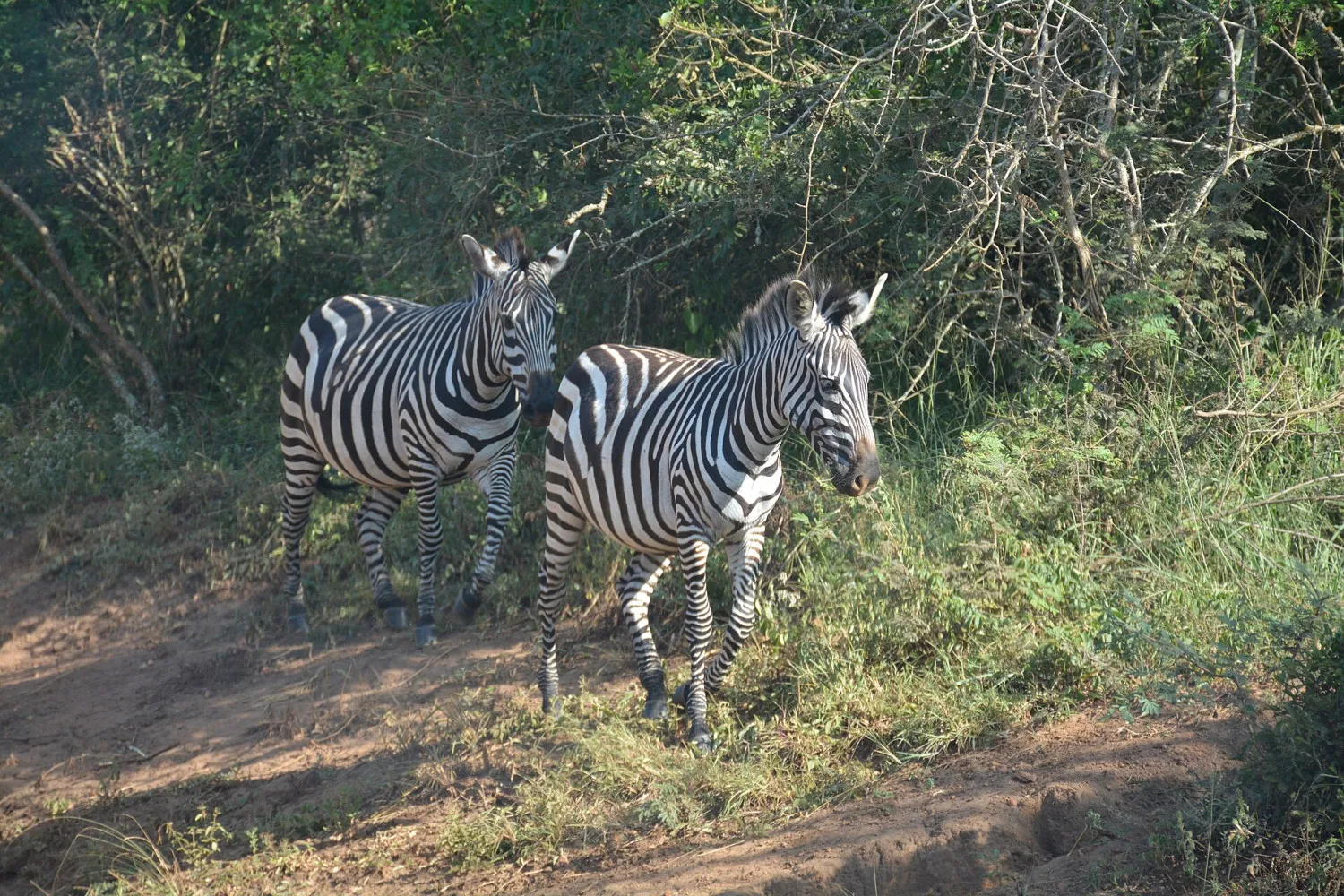
After breakfast, begin the journey northeast toward Lake Mburo National Park, travelling through southwestern Uganda’s rolling highlands, towns and pastoral landscapes. This is another substantial transfer, but the scenery changes continuously and suitable meal and comfort stops help break the journey. Travellers gradually leave the volcanic and forested southwest behind and enter lower savannah country associated with cattle ranching and the landscapes surrounding Lake Mburo.
Arrival time determines which activity can realistically be included. An evening game drive, boat safari or another suitable wildlife experience may be arranged when conditions and the final timetable allow. Lake Mburo is especially known for zebras, impalas, giraffes, elands and buffaloes, creating another change in wildlife composition. The park’s compact nature also makes it a practical final destination before returning toward Entebbe.
Travellers settle into the selected lodge for the final safari night and enjoy a quieter atmosphere after the active primate section. The placement of Lake Mburo is intentional because it prevents the itinerary from finishing with an extremely long Bwindi-to-Entebbe road journey. This type of route logic is also reflected in Tavira’s broader Uganda Primate Safari planning, where travel comfort matters alongside the number of attractions included.
Day 12: Lake Mburo Wildlife Experience and Return to Entebbe
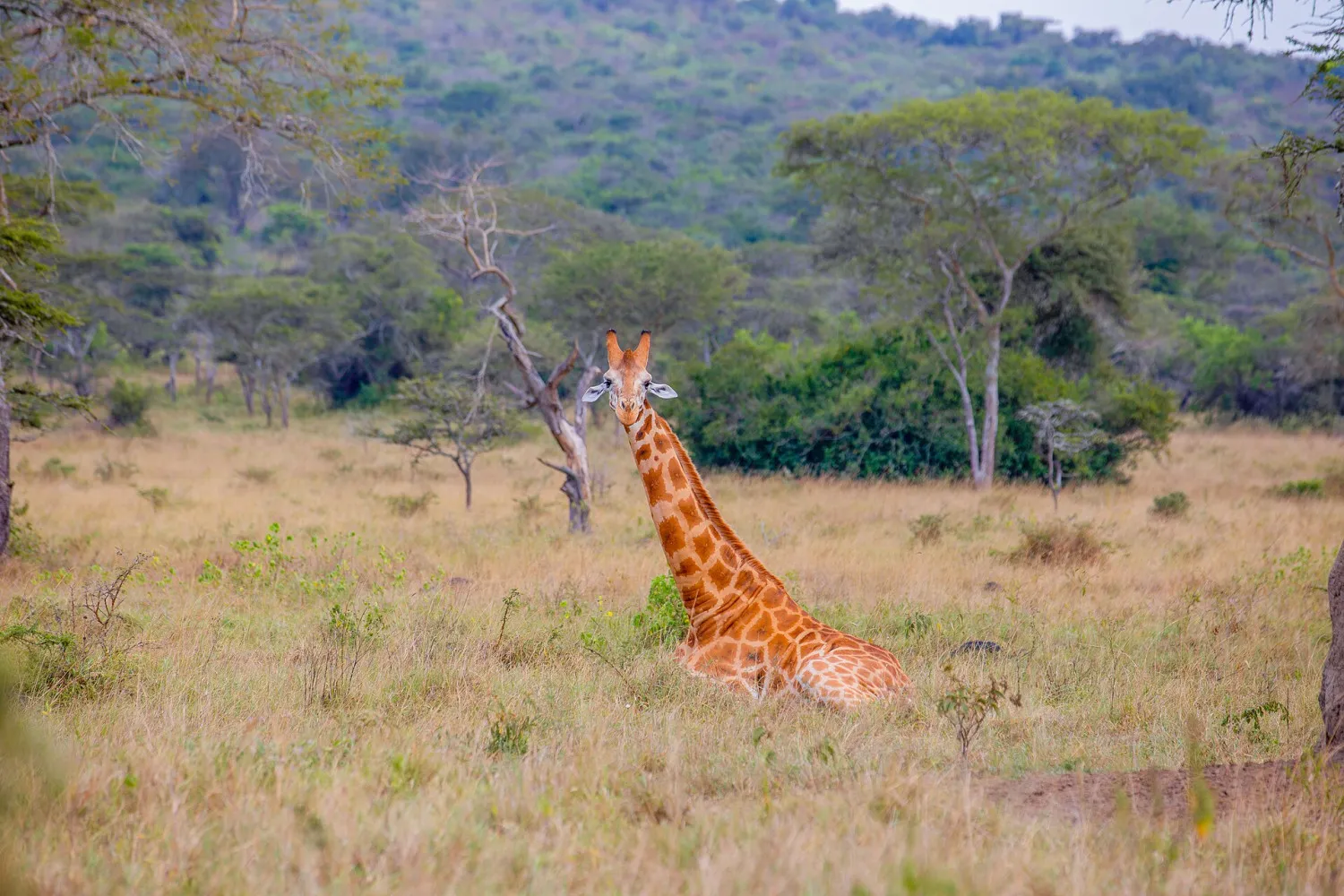
Begin the final day with an early wildlife activity according to the confirmed program. A game drive can cover a wider area, while a guided walking safari may provide a slower perspective under professional supervision. Zebra, giraffe, impala, eland, buffalo and other animals may be encountered, but sightings remain natural. The objective is to enjoy one final wildlife environment before beginning the road journey toward central Uganda.
After leaving Lake Mburo, continue toward Entebbe with suitable stops along the route. Where flight timing allows, travellers can stop around the Uganda Equator for photographs, refreshments and souvenir shopping. The final transfer is coordinated carefully with the international departure schedule, allowing adequate time for airport procedures. Travellers staying an extra night instead of flying immediately can be transferred to their selected Entebbe accommodation.
The 12 Days Uganda Safari concludes after connecting rhinos, Nile wildlife, chimpanzees, savannah game, mountain gorillas, golden monkeys and Lake Mburo within one varied route. Guests interested in future travel can explore Tavira Africa Safaris for additional Uganda and East African journeys. The most important result is not simply the number of parks visited, but how naturally the experiences build upon one another throughout the twelve days.
Why This 12 Days Uganda Safari Route Works
The route works because each destination adds a genuinely different experience. Ziwa introduces rhinos, Murchison delivers large-mammal game viewing and Nile scenery, Kibale adds chimpanzees, Queen Elizabeth reconnects the journey with savannah wildlife, Bwindi provides mountain gorillas, Mgahinga introduces golden monkeys and Lake Mburo breaks the return journey toward Entebbe. Tavira’s Uganda Safari guide explains this diversity in a broader national context.
Murchison Falls is placed early because it lies north of Entebbe, while the remainder of the itinerary gradually moves through western and southwestern Uganda. Once the safari turns south toward Kibale, Queen Elizabeth and Bwindi, the destinations connect more naturally. Tavira’s Murchison Falls Safari Guide shows why the park deserves meaningful time rather than being treated only as a waterfall stop.
The primate experiences are separated by wildlife days and road transfers, preventing the trip from becoming four consecutive demanding forest treks. Chimpanzee trekking comes first in Kibale, followed by Queen Elizabeth’s game viewing before gorilla trekking in Bwindi. Golden monkeys then provide a lighter but still active forest experience. This pacing supports recovery while maintaining the strong primate identity reflected in Tavira’s Uganda Primate Safari Guide.
12 Days Uganda Safari Price for 2026/2027
The total price of a 12 Days Uganda Safari depends on travel dates, group size, accommodation category, room arrangement, permit tariffs and optional activities. A solo traveller normally pays more because the private safari vehicle, guide and fuel are not shared. Couples and small groups can divide transportation expenses, while luxury properties can increase the final package substantially. Tavira therefore prepares date-specific quotations instead of advertising one price for every departure.
| Cost Component | How It Affects the Safari Price |
|---|---|
| Gorilla Permit | Fixed wildlife-authority cost based on traveller category and date |
| Chimpanzee Permit | Fixed cost determined by the applicable Kibale tariff |
| Golden Monkey Activity | Added according to the current Mgahinga tariff |
| Accommodation | Varies significantly between mid-range and luxury properties |
| Private Vehicle | Per-person cost falls as more travellers share transportation |
| Park Fees | Calculated from parks visited and applicable visitor category |
| Boat Safaris | Nile and Kazinga activities are included when stated in the quotation |
| Season | Lodge pricing and selected permit rates may change by period |
Accommodation usually creates the largest variable after transportation because Uganda offers everything from practical mid-range lodges to premium forest and wilderness properties. Travellers seeking value can combine excellent mid-range accommodation with the same core permits and activities, while luxury guests may prioritize exceptional locations and service. Comparing Tavira’s Uganda safari packages helps illustrate how itinerary length and lodge selection influence complete safari budgets.
Tavira recommends requesting a written quotation that identifies the lodge, room type, meal basis, permits, transportation and activities rather than comparing only the headline total. Two twelve-day safaris can differ dramatically if one excludes permits or uses accommodation far from the correct trekking area. Travellers considering a shorter benchmark can review the 5-Day Uganda Gorilla and Wildlife Safari before comparing longer private journeys.
Gorilla, Chimpanzee and Golden Monkey Permits
Primate permits are among the first items Tavira checks because their availability can determine the entire safari sequence. Gorilla permits are tied to official trekking arrangements, and the confirmed Bwindi sector influences accommodation and transfer planning. A permit should therefore be secured before selecting a lodge solely because it looks attractive online. Tavira’s Bwindi Gorilla Trekking Guide explains the importance of matching sector and accommodation correctly.
For foreign non-residents, Uganda’s standard gorilla tracking tariff is US$800, while the introduced low-season rate is US$600 during April, May and November when the discounted tariff applies. From January 2027, the published standard foreign non-resident gorilla tracking rate remains US$800. Travellers should always ask Tavira to verify the exact tariff applicable to their intended date before any payment or non-refundable arrangement is made.
Kibale chimpanzee tracking for foreign non-residents uses a standard rate of US$250 during the 2026 tariff period, while the introduced low-season rate is US$200 during April, May and November when applicable. From January 2027, the published standard foreign non-resident Kibale chimpanzee tracking tariff becomes US$300. Permit pricing can change, so the amount should always be reconfirmed during the actual booking process.
Golden monkey trekking requires its own official activity arrangement and should be coordinated with the confirmed Mgahinga date. Because this journey includes three primate experiences, permit dates must work together rather than being purchased independently without considering road transfers. Travellers can prepare further through Tavira’s Gorilla Trekking Guide and this specialist Uganda gorilla trekking resource before requesting availability.
Travellers should provide accurate identification information when permits are being secured and understand the payment terms attached to wildlife-authority bookings. Permit policies can differ from ordinary accommodation because availability is limited and cancellations or rescheduling may have restrictions. This is another reason to build the itinerary around confirmed primate dates rather than booking random lodges first and hoping the required activities remain available later.
Accommodation on the 12 Days Uganda Safari
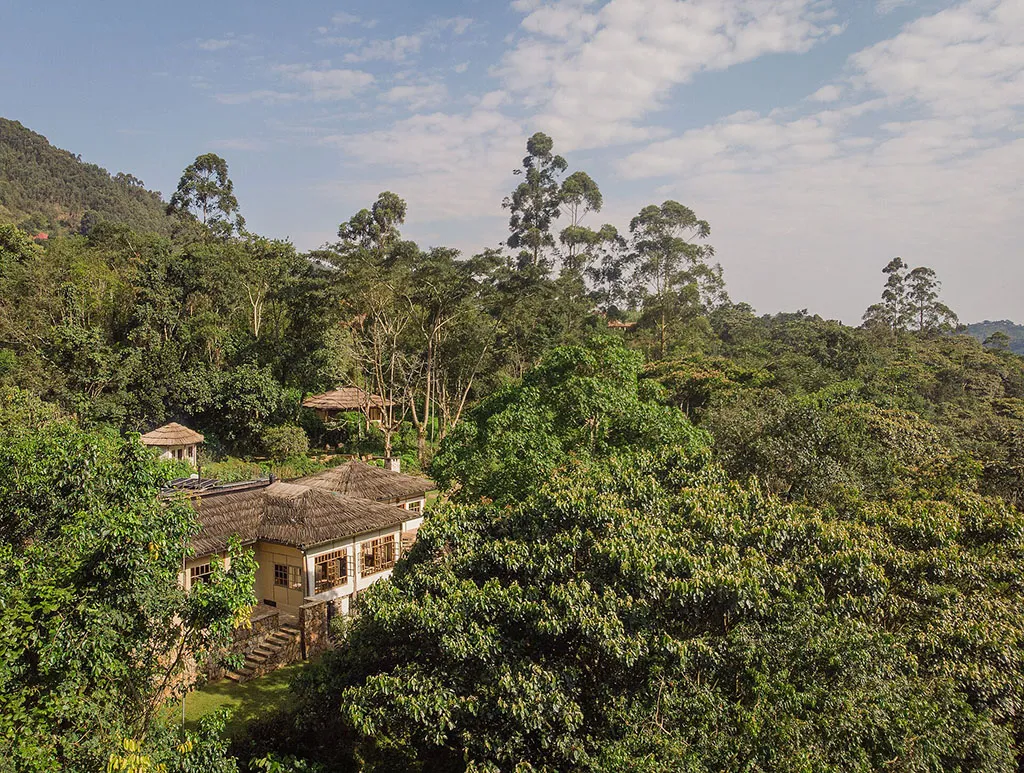
Accommodation can be arranged at mid-range or luxury level, and some travellers choose a combination of both. The right lodge is not simply the most expensive property; location, road access, food, room comfort and proximity to the following morning’s activity all matter. Tavira’s tailor-made safari approach allows accommodation to be selected around the complete route rather than treating each night as an isolated hotel reservation.
| Destination | Mid-Range Style | Luxury Style |
|---|---|---|
| Entebbe | Comfortable airport-area hotel | Premium boutique or lake-view property |
| Murchison Falls | Well-located safari lodge | Premium Nile or wilderness lodge |
| Kibale | Comfortable forest lodge | High-end forest retreat |
| Queen Elizabeth | Convenient safari lodge | Premium wilderness property |
| Bwindi | Comfortable lodge matched to permit sector | Premium forest lodge matched to permit sector |
| Mgahinga/Kisoro | Comfortable highland lodge | Premium Virunga-region property |
| Lake Mburo | Comfortable safari lodge | Premium wilderness lodge |
In Murchison Falls, accommodation should make practical sense for the scheduled game drive and boat safari rather than adding unnecessary road time. Travellers can use Tavira’s Murchison Falls planning guide to understand how different areas of the park affect daily logistics. A beautifully photographed lodge can still be the wrong choice if its location creates very early departures or lengthy transfers for the activities included.
Accommodation around Kibale should provide convenient access to the official chimpanzee activity while remaining comfortable after the long road transfer from Murchison. Around Queen Elizabeth, the right area depends on the game-drive route, boat safari and direction toward Ishasha. Tavira designs these nights together so travellers are not repeatedly driving past the same junctions simply because accommodations were selected independently before the itinerary was finalized.
Bwindi requires the greatest precision because accommodation needs to match the confirmed gorilla sector. Staying in the wrong part of the forest can turn a straightforward trekking morning into an impractical pre-dawn road transfer. Mgahinga accommodation should then support the next golden monkey experience without forcing unnecessary movement. Travellers considering alternate gorilla logistics can compare Uganda and Rwanda gorilla trekking before choosing the overall route.
Wildlife You May See During the Safari
The 12 Days Uganda Safari offers opportunities to encounter an exceptionally broad range of wildlife because it passes through forests, wetlands, river systems, savannahs and highland environments. Rhinos are the focus at Ziwa, while Murchison Falls may reveal elephants, giraffes, buffaloes, lions, leopards, Uganda kobs, hartebeests, hippos and crocodiles. Birdlife remains present throughout the route and can add considerable value even for travellers who are not dedicated birdwatchers.
Kibale shifts the focus toward primates, with chimpanzees forming the headline experience while several monkey species and forest birds may also be encountered. Queen Elizabeth returns the itinerary to savannah wildlife, including elephants, buffaloes, Uganda kobs, warthogs and possible predators. The Kazinga Channel adds hippos, crocodiles and waterbirds. Travellers interested in Uganda’s contrasting habitats can explore Tavira’s national park comparison.
Bwindi is centered on mountain gorillas, while Mgahinga introduces golden monkeys and the distinctive bamboo and volcanic landscapes of the Virunga region. Lake Mburo then completes the journey with species such as zebra, impala, giraffe, eland and buffalo. Wildlife remains free-ranging throughout the safari, so responsible itinerary language should always describe what travellers may encounter rather than promising sightings that no guide or operator can guarantee.
Can You See the Big Five on This Uganda Safari?
This itinerary creates opportunities to search for all members of the traditional African Big Five, but no complete sighting can be guaranteed. Ziwa provides the rhino component, while elephants, buffaloes, lions and leopards may occur within Uganda’s savannah parks. Leopard sightings are especially unpredictable. The safari therefore offers a strong Big Five circuit without presenting wildlife as a checklist that nature must deliver according to a fixed schedule.
Travellers who value the Big Five should tell their guide so that wildlife drives can emphasize productive habitats where practical, while still maintaining realistic expectations. Uganda’s strongest advantage is that the safari goes far beyond those five animals, adding gorillas, chimpanzees, golden monkeys, giraffes, hippos and abundant birdlife. Tavira’s game-driving guide provides additional information about how wildlife viewing differs between Uganda’s savannah parks.
12 Days Uganda Safari Inclusions
A complete quotation should state clearly what the safari includes so travellers can compare genuine value rather than only comparing headline prices. Typical inclusions can cover private safari transportation, a professional driver-guide, eleven nights of accommodation, meals according to the confirmed lodge plan, park entrance fees, scheduled game drives, boat safaris, drinking water and the primate permits specifically listed within the final proposal.
| Usually Included | Details |
|---|---|
| Private Safari Vehicle | Transportation for the confirmed route |
| Professional Driver-Guide | Guiding throughout the private road safari |
| Accommodation | Eleven nights according to the final proposal |
| Meals | According to the confirmed meal plan |
| Gorilla Permit | When specifically listed in the quotation |
| Chimpanzee Permit | When specifically listed in the quotation |
| Park Fees | For activities included in the itinerary |
| Boat Safaris | Nile and Kazinga Channel when confirmed |
Travellers should specifically confirm whether gorilla, chimpanzee and golden monkey activities are included rather than assuming they are covered by a general statement about park fees. Permit costs form an important part of the overall price and may have different payment conditions from accommodation. A transparent quotation should also identify the vehicle arrangement, selected lodge category and whether meals are full board throughout the safari.
12 Days Uganda Safari Exclusions
International flights, visa expenses, personal travel insurance, tips, premium drinks, laundry, souvenirs and activities not listed in the confirmed itinerary are normally excluded unless agreed otherwise. Travellers remain responsible for ensuring their passports, visas, vaccinations where applicable and insurance documentation meet current requirements. Optional activities requested during the safari may involve additional charges and should be discussed with the guide before arrangements are made on the traveller’s behalf.
| Usually Excluded | Details |
|---|---|
| International Flights | Travel to and from Uganda |
| Visa Costs | Applicable immigration charges |
| Travel Insurance | Personal comprehensive travel cover |
| Tips | Optional gratuities |
| Personal Purchases | Souvenirs, laundry and personal expenses |
| Optional Activities | Anything not specified in the confirmed itinerary |
Best Time for a 12 Days Uganda Safari
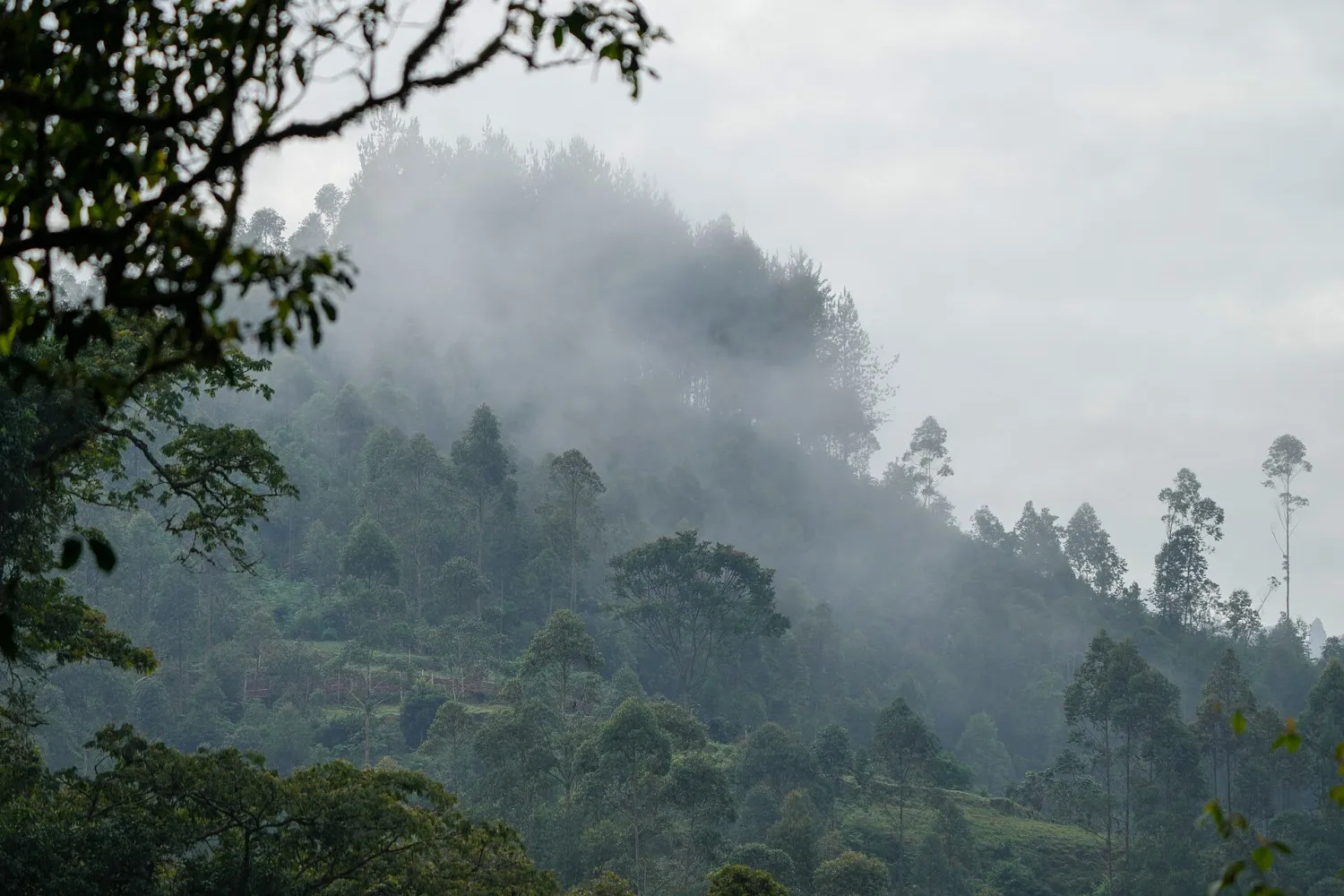
The 12 Days Uganda Safari can operate throughout the year because gorilla trekking, chimpanzee tracking and Uganda’s major wildlife experiences are available in every season. The best time depends on whether the traveller values relatively drier trekking conditions, greener landscapes, lower visitor numbers or potential low-season permit savings. Uganda’s tropical climate means rain can occur even during months generally described as dry, especially around rainforest destinations.
June through September is one of the most popular periods for Uganda safaris because conditions are often relatively dry across several parts of the country. Forest trails may be more manageable, while savannah wildlife viewing remains rewarding. Demand for gorilla permits and well-located accommodation can consequently be strong. Travellers targeting these months should begin planning early rather than assuming suitable permits and rooms will remain available close to departure.
December through February is another popular travel period, combining relatively dry conditions with excellent opportunities for both primate trekking and savannah wildlife experiences. Holiday weeks around Christmas and New Year can become particularly busy. Travellers should still pack rain protection because Bwindi, Kibale and Mgahinga are forest environments where local weather can change quickly even when broader seasonal patterns suggest generally favourable conditions.
April and May are usually wetter, creating exceptionally green landscapes and potentially muddier forest trails. These months can appeal to photographers, flexible travellers and visitors who prefer quieter periods. The introduced low-season permit structure can also reduce primate costs when applicable. Tavira recommends weighing the possibility of heavier rainfall against lower visitor pressure and potential savings rather than automatically dismissing the wetter months as unsuitable for Uganda travel.
November provides another attractive green-season option, with increased chances of rainfall but fewer visitors in some locations. Eligible low-season primate tariffs can make this period particularly interesting for cost-conscious travellers. Anyone choosing wetter months should prioritize proper hiking footwear, rain protection and flexible expectations. Travellers can also consult Tavira’s Uganda Primate Safari Guide when deciding how different seasons affect forest activities and route planning.
| Travel Period | General Character | Suitable For |
|---|---|---|
| December–February | Generally drier and popular | Primates and wildlife combinations |
| March | Transition toward wetter conditions | Flexible travellers |
| April–May | Wetter, greener and quieter | Low-season value and photography |
| June–September | Popular and generally drier | First-time Uganda safari travellers |
| October | Increasing rainfall and greenery | Photography and quieter travel |
| November | Wet, green and often quieter | Low-season primate planning |
Driving Distances and Travel Times
A twelve-day road safari necessarily includes several substantial transfers because Uganda’s major primate and wildlife destinations are spread across different regions. Travellers should view driving days as part of the experience rather than wasted time, since the countryside, towns, farms and highlands reveal a side of Uganda that cannot be seen inside national parks. Exact journey times vary with lodge location, traffic, road conditions and weather.
| Route | Planning Expectation |
|---|---|
| Entebbe to Ziwa | Several hours depending on traffic and departure time |
| Ziwa to Murchison Falls | Additional road transfer after rhino tracking |
| Murchison Falls to Kibale | One of the longest driving days |
| Kibale to Queen Elizabeth | Moderate western Uganda transfer |
| Queen Elizabeth to Bwindi | Varies greatly by trekking sector and Ishasha route |
| Bwindi to Mgahinga | Highly dependent on confirmed Bwindi sector |
| Mgahinga to Lake Mburo | Substantial southwestern transfer |
| Lake Mburo to Entebbe | Comfortable final transfer with possible Equator stop |
The longest stage is generally the journey between Murchison Falls and Kibale, which is why no demanding activity is scheduled immediately after arrival. Queen Elizabeth to Bwindi can also vary significantly depending on the permit sector. This is another example of why local route planning matters more than copying distances from a map. Tavira designs each transfer around the actual lodge and activity rather than generic destination names.
What to Pack for the 12 Days Uganda Safari
Packing should account for rainforest trekking, warm savannah environments, cool early mornings and possible rainfall. Travellers need practical layers rather than excessive luggage. Strong hiking footwear with reliable grip is particularly important for Bwindi and Kibale, while lightweight neutral clothing works well during wildlife drives. A compact waterproof jacket should remain accessible because forest weather can change unexpectedly even during Uganda’s generally drier travel periods.
Long trousers and long-sleeved shirts help protect against vegetation and insects during primate trekking. Lightweight, quick-drying materials are generally easier to manage than heavy fabrics. Trekking or gardening gloves can be useful when balancing on steep forest sections, while long socks provide additional protection. Travellers should wear hiking boots before the trip instead of discovering blisters or discomfort for the first time on the gorilla trekking morning.
A small daypack is useful for drinking water, rain protection, camera equipment, sunscreen and essential personal items during trekking activities. Avoid carrying unnecessary weight because steep terrain can make even a modest bag feel heavy after several hours. Porter services can provide practical assistance during gorilla trekking while also supporting local employment. Travellers should discuss porter arrangements with their guide before the trekking activity begins.
For savannah activities, sunglasses, sunscreen, a hat, comfortable shoes and a light fleece or sweater are useful. Early morning game drives can feel cool before temperatures rise later in the day. Camera users should carry spare batteries and sufficient storage while protecting equipment from dust and rain. Flash photography should not be used around gorillas, and ranger instructions always take priority over obtaining a particular photograph.
Travellers should also carry appropriate travel documents, personal medication, insurance information and any required confirmations. Important medicines and essential documents are best kept in hand luggage during international flights. Tavira’s Gorilla Trekking Guide provides further preparation for forest activities, while the Uganda Safari guide gives broader information about travelling through different environments during a longer journey.
Fitness and Trekking Difficulty
The safari suits travellers with ordinary general fitness, but gorilla trekking can become physically demanding depending on the assigned family’s location. Chimpanzee trekking and golden monkey trekking also involve forest walking, though the terrain and pace differ. The itinerary deliberately separates major trekking days with transfers or wildlife activities so visitors have opportunities to recover rather than completing all primate experiences on consecutive physically demanding mornings.
Anyone who walks regularly and can manage uneven ground generally has a useful foundation, but additional preparation is worthwhile before departure. Walking hills, using stairs and building general endurance can improve comfort considerably. Travellers with mobility concerns should mention them during planning so Tavira can provide realistic advice. No responsible operator can promise an easy gorilla trek because the animals decide where they move within the forest.
Who Is This 12 Days Uganda Safari Best For?
The itinerary works exceptionally well for first-time visitors who want one Uganda journey to include the country’s major primate encounters and a substantial wildlife circuit. Couples, photographers, honeymooners, private groups and solo travellers can all use the same overall route with different accommodation and pacing. The journey is particularly valuable for international travellers who have invested in a long-haul flight and want more than a brief gorilla-only visit.
Dedicated primate enthusiasts gain exceptional variety because chimpanzees, mountain gorillas and golden monkeys are experienced in different forest environments. Wildlife travellers benefit from Murchison Falls, Queen Elizabeth, Ziwa and Lake Mburo, while photographers encounter rainforest, savannah, wetlands, rivers, volcanic highlands and wildlife. Travellers wanting an even more extensive national circuit can compare the itinerary with Tavira’s 21-Day Uganda Safari.
Can the 12 Days Uganda Safari Start From Kigali?
Yes, Tavira can redesign the journey around Kigali when international flights, traveller plans or permit availability make Rwanda a more convenient gateway. However, the route should not simply be reversed without considering geography. Starting from Kigali places travellers close to southwestern Uganda, making Bwindi and Mgahinga logical early experiences before continuing north through Queen Elizabeth, Kibale and Murchison Falls toward Entebbe or returning according to the final arrangement.
A Kigali start can therefore be excellent, but it becomes a different version of the itinerary rather than only changing the airport name. Border procedures, permit sectors and lodge locations need to be considered carefully. Travellers deciding between the two gateways can use this Uganda versus Rwanda gorilla comparison before asking Tavira to prepare both an Entebbe-starting and Kigali-starting version for comparison.
12 Days Uganda Safari FAQs
Is 12 days enough for a Uganda safari?
Yes. Twelve days provides enough time to combine several of Uganda’s strongest wildlife and primate destinations when the route is designed logically. This itinerary includes Ziwa, Murchison Falls, Kibale, Queen Elizabeth, Bwindi, Mgahinga and Lake Mburo without attempting to add every national park. Travellers who want Kidepo, Jinja, Semuliki or additional rest days should consider a longer journey instead of compressing more destinations into the same schedule.
What makes this a complete wildlife and primate circuit?
The itinerary combines Uganda’s three headline primate experiences with several classic wildlife environments. Travellers trek chimpanzees in Kibale, mountain gorillas in Bwindi and golden monkeys in Mgahinga, while Ziwa, Murchison Falls, Queen Elizabeth and Lake Mburo provide rhinos, savannah wildlife and boat safaris. Tavira’s Uganda Primate Safari Guide explains how these forest experiences fit into wider wildlife routes.
Does the safari include gorilla trekking?
Yes. Gorilla trekking in Bwindi is one of the defining experiences of the itinerary, provided the required permit is available and included in the confirmed quotation. The exact trekking sector depends on the permit allocation, and accommodation should be selected accordingly. Tavira’s Bwindi Gorilla Trekking Guide explains why travellers should confirm the sector before independently booking a lodge around the forest.
How much is the Uganda gorilla permit?
The standard foreign non-resident gorilla tracking tariff is US$800. Uganda introduced a foreign non-resident low-season rate of US$600 during April, May and November when the discounted tariff applies. The published standard foreign non-resident tariff from January 2027 remains US$800. Tavira checks the exact amount during booking because permit policies and tariffs should always be confirmed for the specific date rather than copied from older online articles.
How much is the Kibale chimpanzee permit?
For foreign non-residents, the standard Kibale chimpanzee tracking rate during the relevant 2026 tariff period is US$250, with an introduced low-season rate of US$200 during April, May and November when applicable. From January 2027, the published standard foreign non-resident Kibale tracking tariff becomes US$300. Travellers should confirm availability and the applicable tariff before finalizing the surrounding accommodation and transfer schedule.
Does this safari include golden monkey trekking?
Yes. The proposed twelve-day route includes golden monkey trekking in Mgahinga Gorilla National Park after the Bwindi gorilla experience. The arrangement works most efficiently when the selected Bwindi sector and lodge location support the onward southwestern route. Tavira can also remove the golden monkey activity for travellers who prefer additional relaxation, Lake Bunyonyi or more time in Bwindi rather than completing another forest trek immediately afterwards.
Can I see the Big Five during this safari?
The route creates opportunities to search for all members of the traditional Big Five, with rhino tracking at Ziwa and elephants, buffaloes, lions and leopards possible within Uganda’s savannah parks. However, no wildlife operator can guarantee all five because sightings depend on natural movements. The safari’s greater strength is its diversity, adding gorillas, chimpanzees, golden monkeys, giraffes, hippos, zebras and numerous other species.
What wildlife is most likely to be seen?
Wildlife commonly associated with the route includes elephants, buffaloes, giraffes, Uganda kobs, hartebeests, hippos, crocodiles, zebras, impalas and elands, while lions and leopards remain possible. The primate experiences focus on chimpanzees, mountain gorillas and golden monkeys. Travellers should approach every park with curiosity rather than a rigid checklist because natural encounters vary from one game drive or trekking day to another.
When is the best time to take this safari?
June through September and December through February are popular because conditions are often relatively dry, but the safari operates throughout the year. April, May and November can be wetter while offering greener landscapes, fewer visitors and potential low-season primate permit advantages. The best month therefore depends on individual priorities. Travellers should always pack rain protection because tropical forest conditions can change regardless of the broader seasonal pattern.
How difficult is gorilla trekking?
Gorilla trekking can range from moderate to physically demanding depending on terrain, rainfall and the location of the assigned gorilla family. The duration cannot be guaranteed because the animals move naturally. Travellers should prepare with regular walking and appropriate footwear. Tavira’s Gorilla Trekking Guide provides further information about fitness, clothing and realistic expectations before entering Bwindi’s mountainous rainforest.
Is this a private safari?
The road itinerary can be arranged privately for the booked travellers, with a dedicated safari vehicle and professional driver-guide. Park-operated activities such as gorilla trekking, chimpanzee trekking, golden monkey trekking and scheduled boat safaris may involve other visitors because they follow official group arrangements. The private road journey still allows the departure time, photographic stops and general daily pace to be planned around the confirmed travellers whenever operationally possible.
Can the itinerary be arranged as a luxury safari?
Yes. Tavira can upgrade accommodation across the route or create a mixed-standard itinerary where travellers spend more on selected destinations. Luxury versions may use premium forest lodges, enhanced rooms, exceptional wilderness locations and additional services, but geography remains important. A highly expensive lodge is not automatically better if it creates impractical road transfers. Tavira prioritizes both comfort and location when designing a premium version of the journey.
Can I choose mid-range accommodation?
Yes. Mid-range accommodation provides excellent value for many travellers because it can deliver comfortable private rooms, good meals and convenient locations without the premium costs associated with high-end properties. The safari activities and permits remain the same regardless of lodge category. Tavira can name every proposed property within the quotation so travellers understand exactly where they will stay rather than receiving only a vague description such as mid-range accommodation.
Can Lake Bunyonyi be added to the itinerary?
Yes. Lake Bunyonyi can be added between Bwindi, Mgahinga or the journey north toward Lake Mburo, depending on the final route. Extending the safari by one night normally produces a more relaxed result than forcing the lake into an already complete twelve-day program. Travellers who value scenery and relaxation may choose Lake Bunyonyi instead of golden monkey trekking or request a thirteen-day version that comfortably includes both experiences.
Can the safari start and end in Kigali?
Yes, but the route should be redesigned carefully because Kigali lies much closer to southwestern Uganda than Murchison Falls. A Kigali-based journey can begin with Mgahinga or Bwindi before progressing through Queen Elizabeth and Kibale toward northern Uganda. Border requirements and final flight arrangements must also be considered. Travellers can read the Uganda or Rwanda gorilla trekking comparison before deciding which gateway suits them.
How early should I book this safari?
Planning should begin as soon as travel dates are reasonably clear, particularly for departures during June, July, August, September, December and other popular periods. Gorilla permits and well-located Bwindi accommodation can become limited. Travellers requiring several permits on the same date should be especially proactive. Tavira can check availability before the complete package is confirmed so the safari is designed around real permit and lodge options.
Is the safari suitable for first-time visitors to Africa?
Yes. The itinerary works particularly well for first-time Africa travellers because it presents several different safari styles within one country. Visitors experience walking-based rhino tracking, traditional game drives, two boat safaris, rainforest primates, volcanic highlands and several accommodation environments. A professional private driver-guide remains with the travellers through the road circuit, reducing the complexity of navigating transportation and activity arrangements independently across multiple destinations.
Can children join the safari?
Families can travel on the wider safari, but age restrictions apply to some primate activities and must be checked before booking. Parents should provide the exact ages of all children so Tavira can determine which experiences are permitted and suggest suitable alternatives where necessary. A family itinerary may also need more relaxed driving stages, different room arrangements and additional downtime compared with an adult-only safari following the standard published schedule.
What happens if it rains during gorilla trekking?
Rain is a normal part of tropical forest travel and trekking activities generally continue unless park authorities determine that conditions require another decision. Travellers should therefore carry waterproof clothing and protect cameras and important belongings. Forest trails can become more slippery during rainfall, making suitable boots especially valuable. Tavira recommends preparing for rain during every month rather than assuming that a dry-season departure guarantees completely dry trekking conditions.
Can the itinerary be customized?
Yes. This published journey is a strong planning framework rather than an inflexible group schedule. Tavira can adjust accommodation category, activity order, extra nights and selected destinations around permit availability and international flights. Travellers may also compare the route with Tavira’s longer Uganda safari or shorter gorilla and wildlife itinerary before deciding how much time they want to spend in Uganda.
Where can I read more before booking?
Travellers can continue with Tavira’s Uganda Safari guide, Murchison Falls Safari Guide, Uganda Primate Safari Guide, Bwindi Gorilla Trekking Guide and Complete Gorilla Trekking Guide. Travellers wanting another specialist resource can also review this Uganda gorilla trekking guide before requesting a personalized proposal.
Why Book the 12 Days Uganda Safari With Tavira Africa Safaris?
Tavira Africa Safaris plans the journey from the perspective of a Uganda-based safari operator, considering actual road direction, permit dates, accommodation location and activity timing rather than simply assembling famous destinations into a list. The company’s tailor-made safari approach means each proposal can be adjusted around the traveller’s dates, budget and preferred comfort level while preserving the experiences that matter most.
Local planning becomes especially valuable around Bwindi and Mgahinga because the wrong lodge or trekking sector can create unnecessary driving. The same principle applies in Murchison and Queen Elizabeth, where accommodation location influences game-drive and boat-safari logistics. Tavira therefore approaches the twelve-day route as one connected operation, coordinating permits, accommodation, transportation and activities instead of asking travellers to solve each component independently.
The safari also remains transparent about wildlife. Gorillas and chimpanzees are tracked under regulated park systems, while lions, leopards, elephants and other animals move naturally through their habitats. Tavira creates strong opportunities through suitable routes and experienced guiding without presenting any wild animal as guaranteed. This approach allows travellers to enjoy unexpected encounters rather than judging every day only according to whether a predetermined species checklist was completed.
Book Your 12 Days Uganda Safari: Complete Wildlife & Primate Circuit
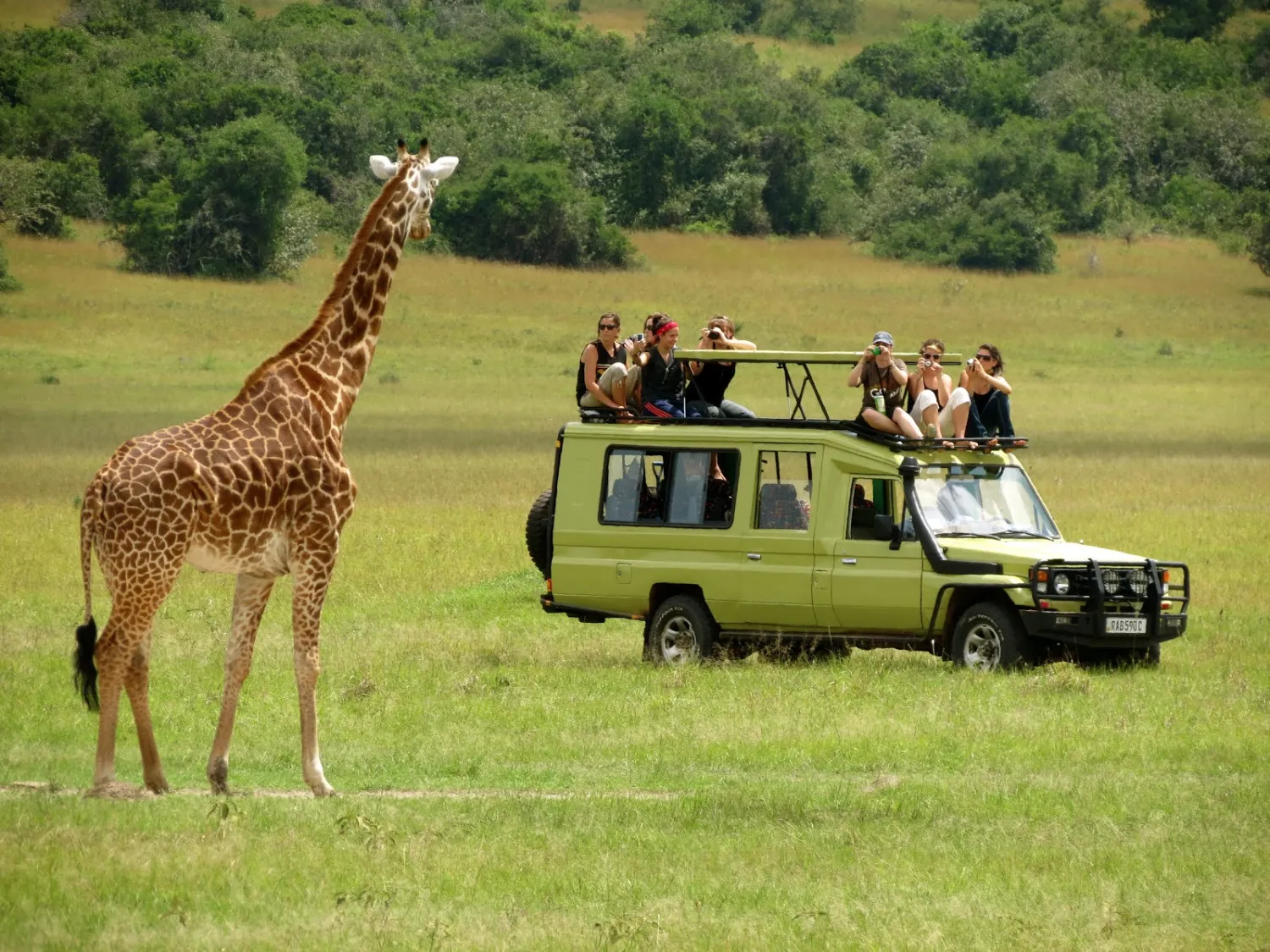
The 12 Days Uganda Safari: Complete Wildlife & Primate Circuit combines some of Uganda’s most powerful wildlife experiences within one coherent journey. Rhino tracking, Nile game viewing, chimpanzee trekking, Kazinga Channel wildlife, mountain gorillas, golden monkeys and Lake Mburo create constant variety. The safari moves through changing ecosystems instead of repeating the same experience, giving travellers a broad understanding of why Uganda is such an exceptional nature destination.
The strongest feature of the route is balance. Murchison Falls delivers large-scale savannah and river scenery before Kibale introduces rainforest primates. Queen Elizabeth provides another wildlife chapter, Bwindi creates the emotional gorilla highlight, Mgahinga adds volcanic highlands and golden monkeys, while Lake Mburo provides a relaxed final park. Each destination earns its place by adding something different rather than simply increasing the number of stops.
Travellers can arrange the journey at comfortable mid-range level, upgrade to luxury accommodation or combine categories according to personal priorities. Permit dates remain the most important fixed elements, especially when several people require the same trekking day. Once those activities are secured, Tavira can coordinate practical accommodation and realistic road transfers around them, producing a safari that works operationally instead of looking impressive only when written on paper.
Before booking, compare the complete quotation rather than only the final number. Check the named lodges, room type, meal plan, permits, park fees, vehicle, boat safaris and scheduled activities. Travellers who understand exactly what is included can compare offers more intelligently. Tavira’s Africa safari packages provide additional itinerary ideas for guests considering Uganda alongside Rwanda or other East African destinations.
The next step is to provide your approximate travel dates, number of travellers, nationality or residency category, accommodation preference and international flight plans. Tavira Africa Safaris can then check current permit availability and prepare a detailed private proposal. With thoughtful planning, this twelve-day journey becomes much more than a collection of parks: it becomes a connected story of Uganda’s forests, rivers, savannahs, primates, wildlife and landscapes.